
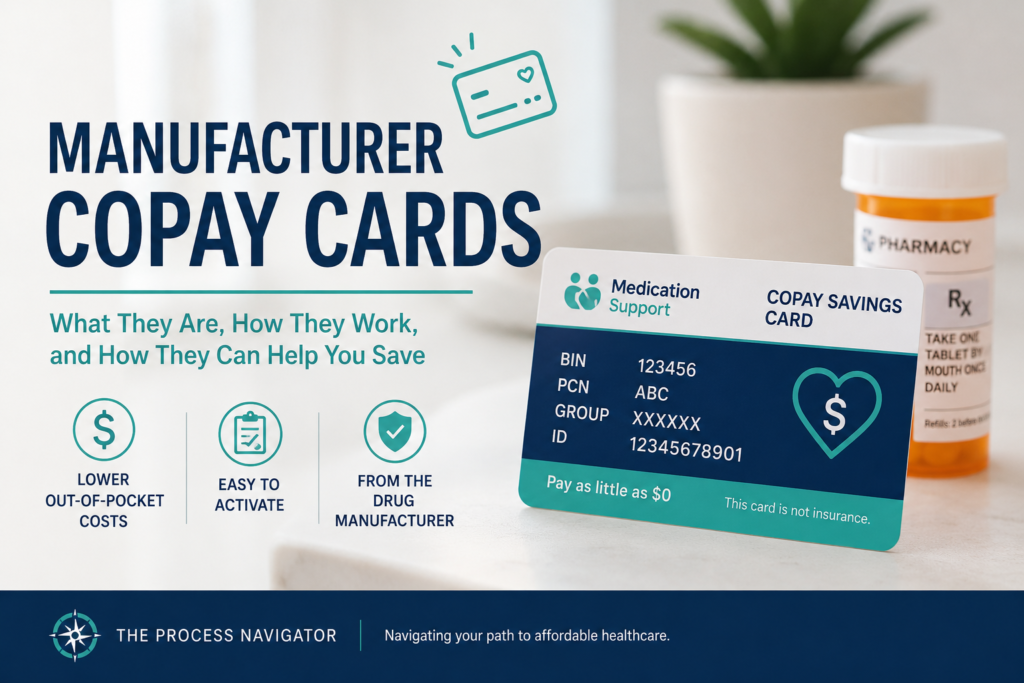
If you or a loved one has ever been prescribed a specialty medication, you already know the shock that can come when you see the price tag. Some medications cost thousands — sometimes even tens of thousands — of dollars every month. For many patients, manufacturer copay assistance programs can feel like a lifeline. These programs are designed to help reduce out-of-pocket costs and make treatment more affordable.
But what many patients don’t realize is that using copay assistance does not always help them the way they expect.
In fact, one of the biggest frustrations patients face today is discovering that the money paid by a manufacturer assistance program may not count toward their insurance deductible or out-of-pocket maximum.
What Is Manufacturer Copay Assistance?
Many pharmaceutical companies offer copay cards or copay assistance programs for eligible patients taking brand-name specialty medications. These programs are meant to lower the patient’s share of the cost at the pharmacy.
For example:
- Your medication costs $8,000 per month
- Your insurance leaves you responsible for a $250 copay
- A manufacturer copay card covers that $250
Sounds simple, right?
Unfortunately, insurance companies have added new policies that can change how these savings apply to your plan.
The Obstacle Most Patients Never Hear About
Many insurance companies now use programs called:
- Copay accumulators
- Copay maximizers
- Alternative funding programs
These programs can prevent manufacturer assistance dollars from counting toward your deductible or annual out-of-pocket maximum.
That means even though the copay card paid hundreds or thousands of dollars on your behalf, your insurance company may still act as if you paid nothing at all toward your deductible.
Patients often do not discover this until:
- Their copay assistance suddenly runs out
- They receive a massive bill mid-year
- Their pharmacy tells them they now owe thousands out of pocket
- Their medication is delayed because of unpaid balances
Why This Creates a Major Problem?
Many patients budget their healthcare expenses assuming that once they meet their deductible or out-of-pocket maximum, their medication costs will decrease.
But with accumulator adjustment programs, patients may spend months using copay assistance without making progress toward those limits.
This creates several issues:
Financial Stress
Patients can be blindsided by unexpected costs later in the year when assistance funds are exhausted.
Treatment Delays
Some patients stop treatment temporarily because they cannot afford the sudden increase in costs.
Confusion and Misinformation
Many patients are never clearly informed that their insurance plan uses these programs. Even healthcare providers and pharmacy staff sometimes discover it only after claims begin processing.
Administrative Burden
Patients often spend hours calling:
- Insurance companies
- Specialty pharmacies
- Manufacturer assistance programs
- Provider offices
Trying to understand why balances are changing.
What Patients Should Ask Before Starting Therapy?
Before filling a specialty medication, patients should ask:
- Do i have commercial insurance?
- They cannot be used by individuals covered under:
- Medicare
- Medicaid
- TRICARE
- Veterans Affairs (VA) programs
- They cannot be used by individuals covered under:
- Does my insurance plan use a copay accumulator or maximizer program?
- Will manufacturer assistance count toward my deductible?
- What happens when copay assistance funds run out?
- Is there a yearly maximum on the manufacturer program?
- Are there foundation grants or alternative assistance programs available?
These questions can help patients avoid surprises later.
Tips for Navigating the System
Keep Records
Track every payment, explanation of benefits (EOB), and assistance approval.
Contact the Manufacturer Program Directly
Many programs have case managers who can explain benefit limits and renewal requirements.
Review Your Insurance Documents Carefully
Terms like “copay adjustment program,” “accumulator,” or “non-essential health benefit” may appear in plan documents.
Advocate Early
If costs become unmanageable, speak with your provider’s financial assistance team before treatment interruptions occur.
Final Thoughts
Manufacturer copay assistance programs can be incredibly valuable, but they are no longer as straightforward as many patients expect. Insurance policies surrounding specialty medications continue to evolve, and unfortunately, patients are often left navigating a complicated system with little guidance.
Understanding how your insurance handles copay assistance can make the difference between staying on therapy consistently and facing unexpected financial hardship.
The healthcare system is complex enough already. Patients deserve transparency, education, and support when trying to access life-changing medications.
“Enjoyed this post? Make sure to subscribe to my newsletter so you never miss an update. Have a question or an idea for a future article? Let’s chat!”
Email: connect@theprocessnavigator.com